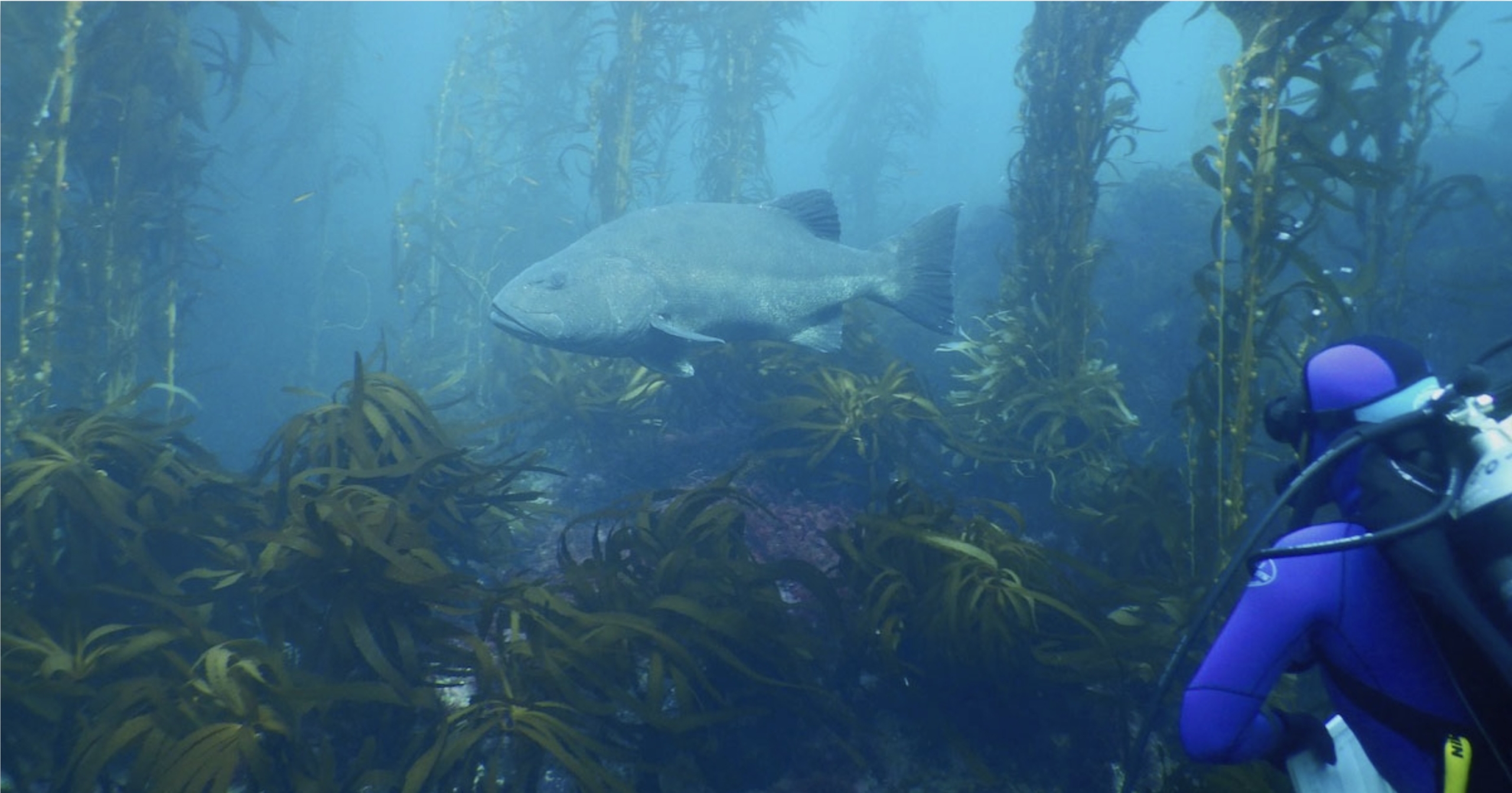
Photo by Vantuna Research Group – Occidental College – used by permission. oxy.edu
Marine Life of Southern California’s Pacific Reefs !
By Liz Jensen, October 11, 2026
AnEcoScape is working on creating awareness in regards to the declining reef in the Pacific Ocean and possible solutions to this problem. This is an article so you can obtain an overview of this amazing marine biosphere. Please read on!
Beneath the surface of the Pacific Ocean, along the coast of Southern California, lies a world filled with extraordinary marine life. From brilliantly colored nudibranchs crawling across rocky ledges to large sharks patrolling the open water, reefs provide homes, feeding grounds, and shelter for an astonishing variety of organisms. Some dwellers are easy to spot, while others remain almost invisible, camouflaged against rocks, tucked into crevices, or concealed among the blades of kelp. Together, these organisms form a complex ecosystem in which every species plays a role.
Although Southern California is not known for the expansive tropical coral reefs found in places such as the Great Barrier Reef, its rocky reefs and kelp forests support an equally fascinating array of marine communities. These habitats extend along the mainland coast and around the Channel Islands, creating underwater neighborhoods where fish, invertebrates, algae, and marine predators interact. Understanding these reef dwellers begins with understanding the structures that make their existence possible.
Rocks, Kelp, and Corals – The Foundation
A reef is more than a collection of rocks beneath the ocean. It is a three-dimensional habitat that offers surfaces for organisms to attach to, crevices in which animals can hide, and places where food accumulates. Natural rocky reefs develop through geological processes, while biological growth can gradually add to their complexity. Their uneven surfaces create a multitude of microhabitats, each suited to different organisms.
In shallow Southern California waters, rocky reefs frequently support forests of giant kelp (Macrocystis pyrifera). Although kelp resembles a plant, it is actually a large brown alga. Anchored to the rocks by root-like holdfasts, giant kelp can grow toward the surface, forming an underwater forest that provides shelter and food throughout the water column. Its blades and stems offer places for small animals to cling, while its dense growth provides protection for young fish and hunting grounds for larger predators. Kelp forests are among the most productive marine ecosystems along the Pacific coast. NOAA Fisheries
Corals also contribute to reef habitats, although it is important to distinguish Southern California’s reefs from tropical coral reefs. Tropical reef-building corals produce extensive calcium carbonate structures in warm, shallow waters. Southern California’s rocky reefs, by contrast, are often built primarily from geological rock. They can support corals adapted to cooler waters, including branching or fan-shaped gorgonians, as well as other attached animals such as sponges, hydroids, and anemones. These organisms add texture, create additional shelter, and provide surfaces for smaller life to settle on. In deeper Pacific waters, some cold-water corals can form substantial structures without relying on sunlight.

Photo from pexels.com
Artificial reefs introduce another dimension to this habitat. Carefully placed rock structures can provide new surfaces for kelp, algae, and invertebrates to colonize, while creating shelter for fish. Over time, the ecological value of these structures depends not simply on their physical presence but on how they become incorporated into the surrounding marine community.
The Colorful and Curious World of Invertebrates
Among the most fascinating reef dwellers are the invertebrates: animals without backbones. They include sea stars, sea urchins, crabs, lobsters, snails, worms, sponges, anemones, and countless smaller organisms. Some are abundant and conspicuous, while others require patience and a trained eye to discover.
Nudibranchs are particularly captivating members of this community. These soft-bodied marine mollusks are often decorated with vivid colors, elaborate projections, and intricate patterns. Their striking appearance is not merely ornamental. Depending on the species, their colors may warn predators that they are toxic or distasteful, or help them blend into their surroundings. Many nudibranchs feed on specific prey, including sponges, hydroids, and anemones. Some can even retain defensive chemicals or stinging structures obtained from their food. Their specialized diets and remarkable adaptations make them excellent examples of the complexity hidden within a seemingly small reef animal.
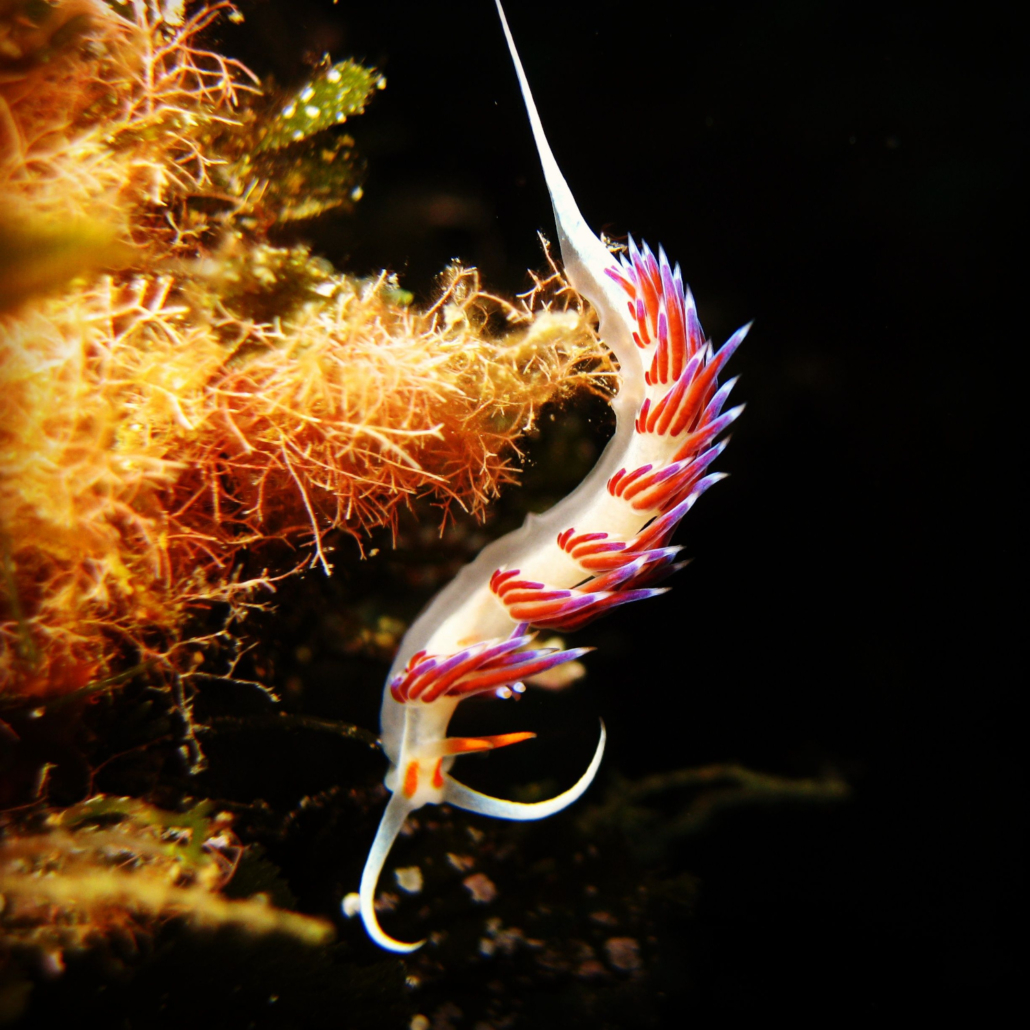
A little Nudibranch. Photo by Chris Spain, pexels.com
Crustaceans are another essential group. Crabs and lobsters occupy cracks, rocky shelters, and spaces beneath ledges, emerging to feed or forage. The California Spiny Lobster,for example, is an important resident of rocky reef habitat. Smaller shrimp and crabs often live among algae, anemones, and other organisms, where their size and camouflage help them avoid predators. Echinoderms, the group that includes sea stars, sea urchins, and brittle stars, are also common inhabitants. Sea stars are predators or scavengers, depending on the species, while brittle stars frequently shelter beneath rocks and feed on small particles or organic matter. Sea urchins graze on algae, helping influence how kelp forests develop. When urchin populations become excessively abundant under certain ecological conditions, their grazing can strip reefs of kelp and create extensive areas known as urchin barrens. This demonstrates how the balance among reef dwellers can influence the entire habitat.
Sea anemones, with their soft bodies and tentacles, attach themselves to rocks and wait for food carried by the current. Their appearance may suggest delicate flowers, but they are predatory animals related to corals and jellyfish. Sponges and other filter feeders perform a different role, drawing water through their bodies to capture suspended particles and microorganisms. Even the smallest attached organisms contribute to the living fabric of the reef.
From Camouflaged Hunters to Brilliantly Colored Residents
Fish are among the most recognizable reef dwellers, yet their diversity of shapes, behaviors, and ecological roles is extraordinary. Southern California’s rocky reefs support species adapted to nearly every part of the habitat, from the seafloor to the kelp canopy.
The Cabezon is a distinctive bottom-dwelling fish that often rests among rocks, waiting for prey to approach. Its broad head, mottled coloring, and ability to blend into its surroundings make it an effective ambush predator. Other bottom-associated fish, including various sculpins and rockfish, use crevices and rocky surfaces for shelter and feeding.
Kelp bass and barred sand bass are familiar residents of Southern California’s coastal waters. Kelp bass frequently patrol rocky reefs and kelp forests, feeding on smaller fish and invertebrates. Rockfish occupy a range of habitats and depths, and many species rely on rocky structures for refuge. Their colors and patterns vary widely, allowing them to blend into different backgrounds.
Not all reef fish remain close to the bottom. Garibaldi, California’s bright orange state marine fish, are conspicuous residents of shallow rocky reefs. They feed on small invertebrates and algae and are known for their territorial behavior, particularly when defending nesting sites. Schooling fish move through the water in groups, feeding on plankton or smaller organisms and providing prey for larger fish, seabirds, and marine mammals.
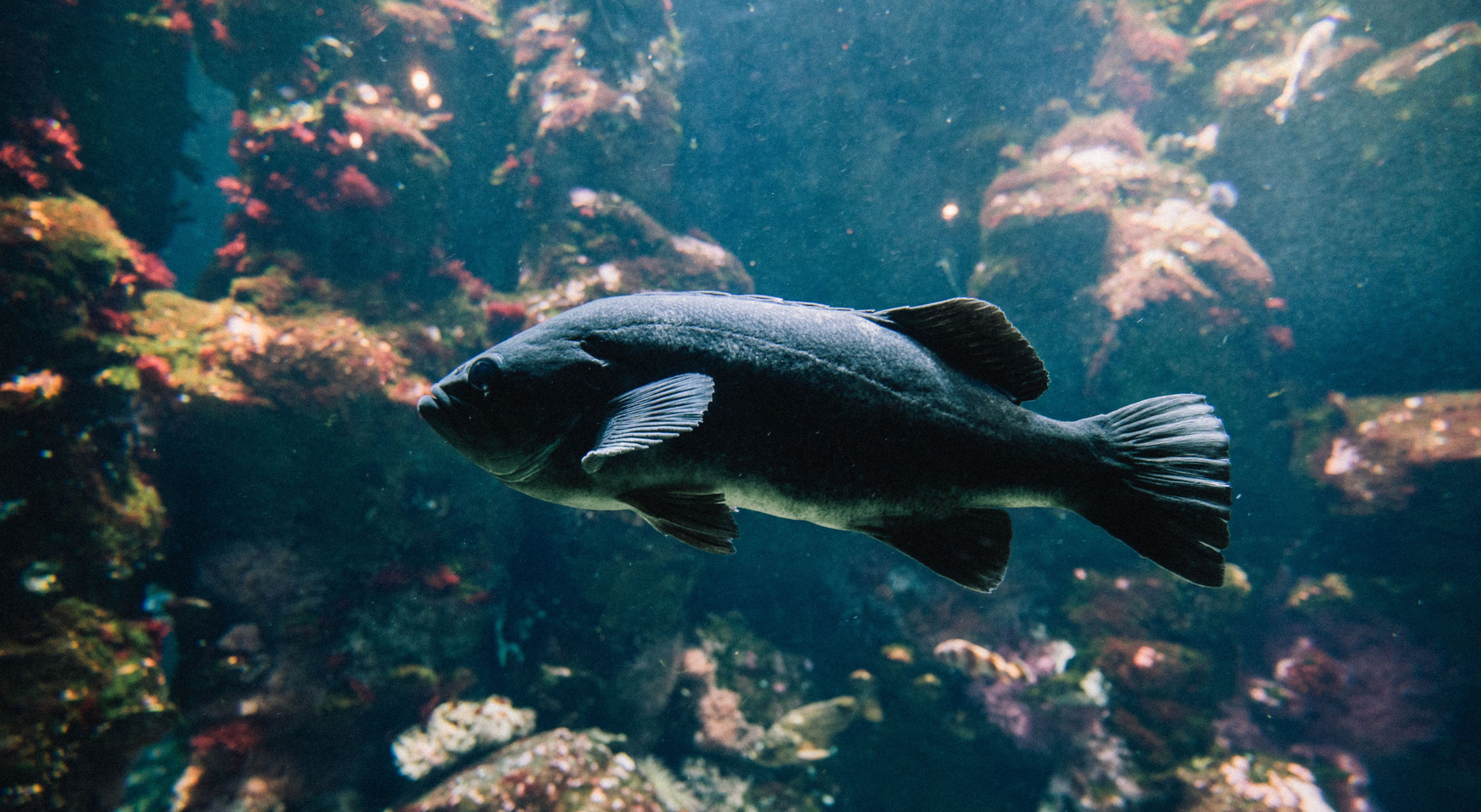
Some species also have important relationships with kelp itself. Young fish may shelter among the fronds, while others forage around the holdfasts or hunt in the open spaces between kelp plants. The combination of rocky substrate and towering kelp creates multiple levels of habitat within a relatively small area.
Sharks and Other Predators – The Larger Reef Dwellers
At the upper levels of the food web are predators that help regulate the abundance and behavior of other marine animals. Sharks are among the most misunderstood inhabitants of the Pacific. Southern California’s coastal waters are home to several species, including leopard sharks, horn sharks, and the occasional larger, more mobile predator.
Large predatory fish, including giant sea bass, also occupy important positions in the ecosystem. Their presence connects reef communities to the broader ocean food web. Marine mammals such as California sea lions and harbor seals visit reef and kelp habitats to feed on fish, while seabirds may hunt above the same waters. The reef is therefore not an isolated community; it is part of a larger network of coastal and oceanic life.
Predators influence more than the number of animals they consume. Their presence can change how smaller animals behave, where they feed, and which areas they occupy. These interactions help maintain the ecological relationships that shape a functioning reef.
Leopard sharks are often encountered in relatively shallow coastal waters, where they feed on bottom-dwelling invertebrates and small fish. Their distinctive dark markings make them easy to recognize. Horn sharks are more closely associated with rocky reefs, where they spend much of their time near the bottom and feed on animals such as crabs, mollusks, and sea urchins.
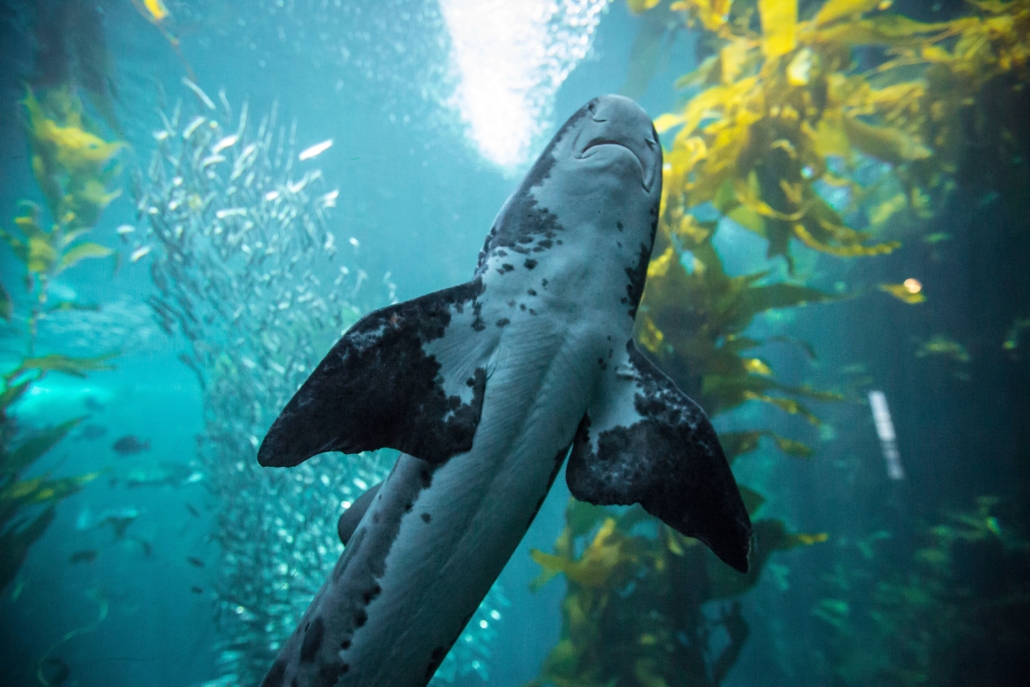
Other sharks may travel across a much wider range of habitats, visiting reefs while pursuing prey or moving along the coast. Predators influence more than the number of animals they consume. Their presence can change how smaller animals behave, where they feed, and which areas they occupy. These interactions help maintain the ecological relationships that shape a functioning reef.
Reef Dwellers Creates A Living Marine Balance
Every reef community is shaped by interactions among its inhabitants and by the surrounding environment. Grazers consume algae, predators feed on other animals, filter feeders remove particles from the water, and kelp captures sunlight to produce the organic material that supports a wider food web. So when one part of the system changes, the effects can spread throughout the community.
Southern California’s reefs face pressures from pollution, sedimentation, changing ocean temperatures, habitat disturbance, and imbalances among species. The loss of kelp or the degradation of rocky habitat can reduce shelter and food for many organisms at once. Conversely, protecting existing reefs and restoring damaged habitats can create opportunities for marine communities to recover.
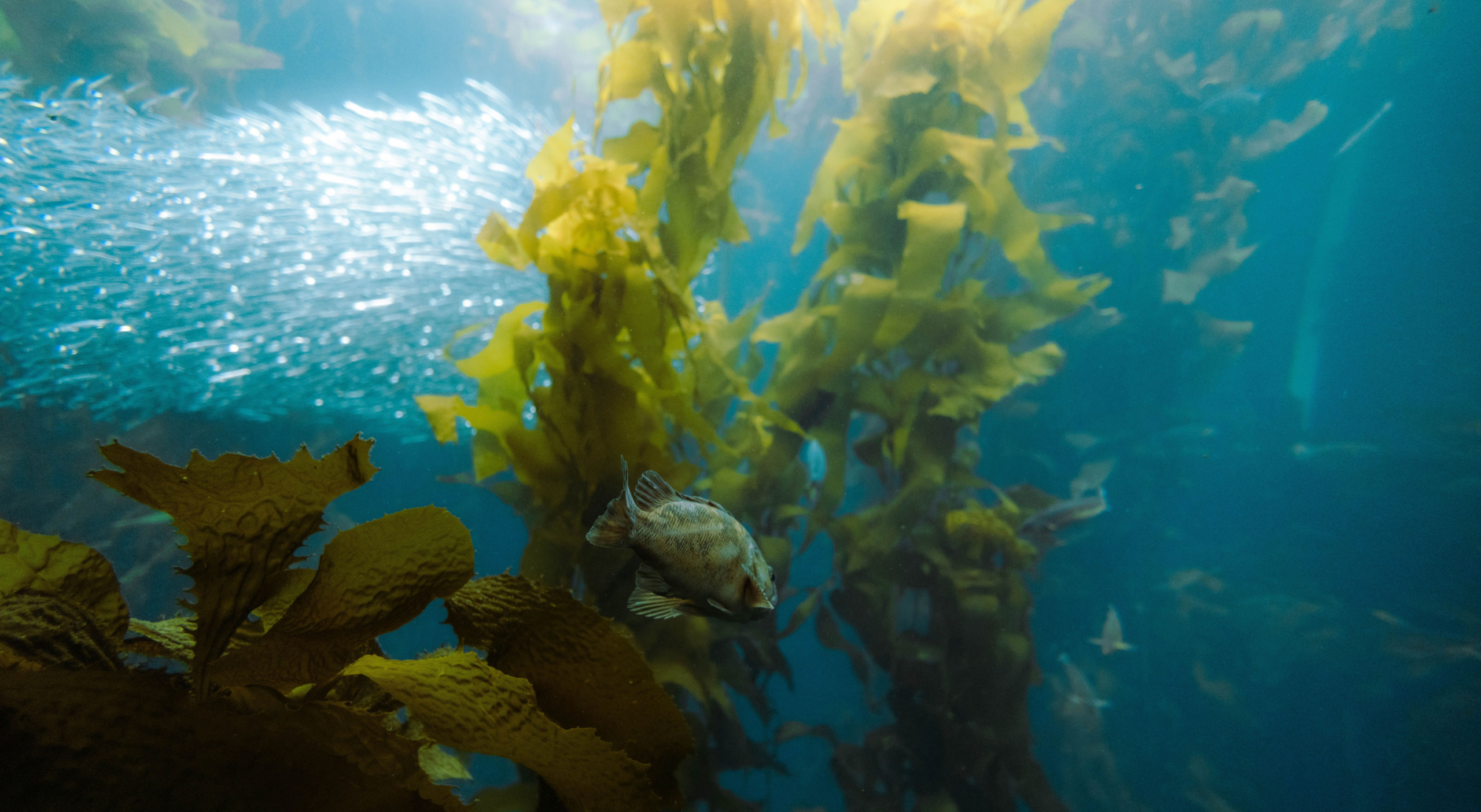
The restoration of Palos Verdes Reef illustrates the potential of habitat restoration in Southern California. Following the placement of more than 70,000 tons of rock in 2020, monitoring documented substantial increases in fish biomass and the return of native kelp, algae, and invertebrates. These results show how restoring physical habitat can help rebuild the ecological relationships on which reef dwellers depend. They also demonstrate why long-term monitoring is important: scientists need to understand not only which organisms arrive, but how the community develops over time.
Southern California’s reefs are a reminder that the ocean’s biodiversity extends far beyond the animals visible from shore. Beneath the waves is a living landscape filled with extraordinary adaptations and intricate ecological connections. By learning about its reef dwellers, we gain a deeper appreciation of the habitats they depend on—and a stronger understanding of why protecting and restoring these underwater communities matters.
Sources
- NOAA Fisheries — Rocky Reef on the West Coast: reef structure, habitat diversity, and deep-water communities.
- NOAA Fisheries — Kelp Forest Habitat on the West Coast: kelp biology, food webs, and threats.
- NOAA Fisheries — A Restored Reef Brings Fish Habitat Back to Southern California: Palos Verdes restoration and monitoring results.
- California Department of Fish and Wildlife — A Guide to the Artificial Reefs of Southern California: regional artificial reef background.
Liz Jensen M.Sci – Technology Analyst & Lead Development at AnEcoScape NPO.
Liz has a B.S in astrophysics and M.Sci in physics, and is passionate about our planet and its health.
This article is written both by a human and with the help of AI to cross reference sources.
AnEcoScape is a Non-Profit 501(c)(3) Organization. Our mission is to educate, improve, and restore the health, productivity, and diversity of the near shore marine life and nearby terrestrial areas, which are rapidly degrading from human activities.
If you like this article, please give us a small contribution by making a Donation to AnEcoScape to support our cause.