
Dwellers of the Reef:
Blennies: Tiny Fish With Very Big Personalities
By Patrick Dean. September 8, 2026
If you were swimming over a Southern California reef looking for wildlife, your eyes would naturally be drawn to the big guys. A kelp bass cruises past. A lobster disappears beneath a rock. Maybe a giant sea bass glides through the distance.
But stop. Get closer to the reef.
Look into that little hole.
Something is looking back at you!
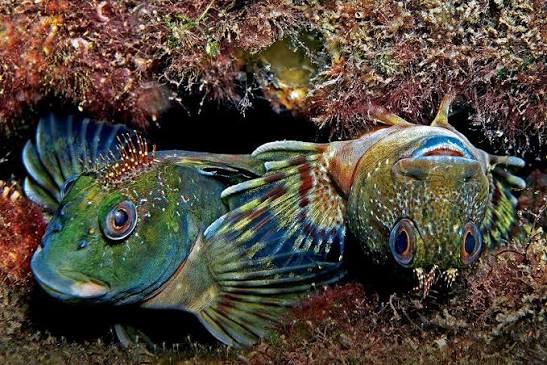
It may be only a few inches long. It may have bushy little eyebrows, enormous eyes, a face that looks permanently curious, and an attitude completely out of proportion to its size.
Welcome to the world of the blennies.
These small bottom-dwelling fishes are some of the most entertaining characters living along the Southern California coast. Some live in rocky reefs. Some inhabit tide pools. Others settle into mussel beds, worm tubes, clam holes, shells, rock cracks, and almost any protected cavity they can find. And that makes them especially interesting to us at AnEcoScape. Because when we build an artificial reef, we aren’t only creating habitat for large fish. We may be creating thousands of tiny neighborhoods.
What Exactly Is a Blenny?
“Blenny” is a name used for several related groups of small, elongated fishes. Some Southern California species are true combtooth blennies, while others—including the remarkable fringeheads—belong to another blenny family.
Fortunately, you don’t need to become a fish expert to appreciate them.
Think of blennies as small residents of the reef that specialize in living close to structure.
Their bodies can slip into small openings. Their colors often blend beautifully with rocks, algae, and mussels. Many have little skin projections called cirri above their eyes that make them look as though they have eyebrows, eyelashes, or tiny underwater antlers.
Once you learn to look for them, the reef suddenly becomes full of faces.
Meet the Neighborhood…Southern California Reef Blenny:
Meet Five Great Blennies…
The Rockpool Blenny – Hypsoblennius gilberti
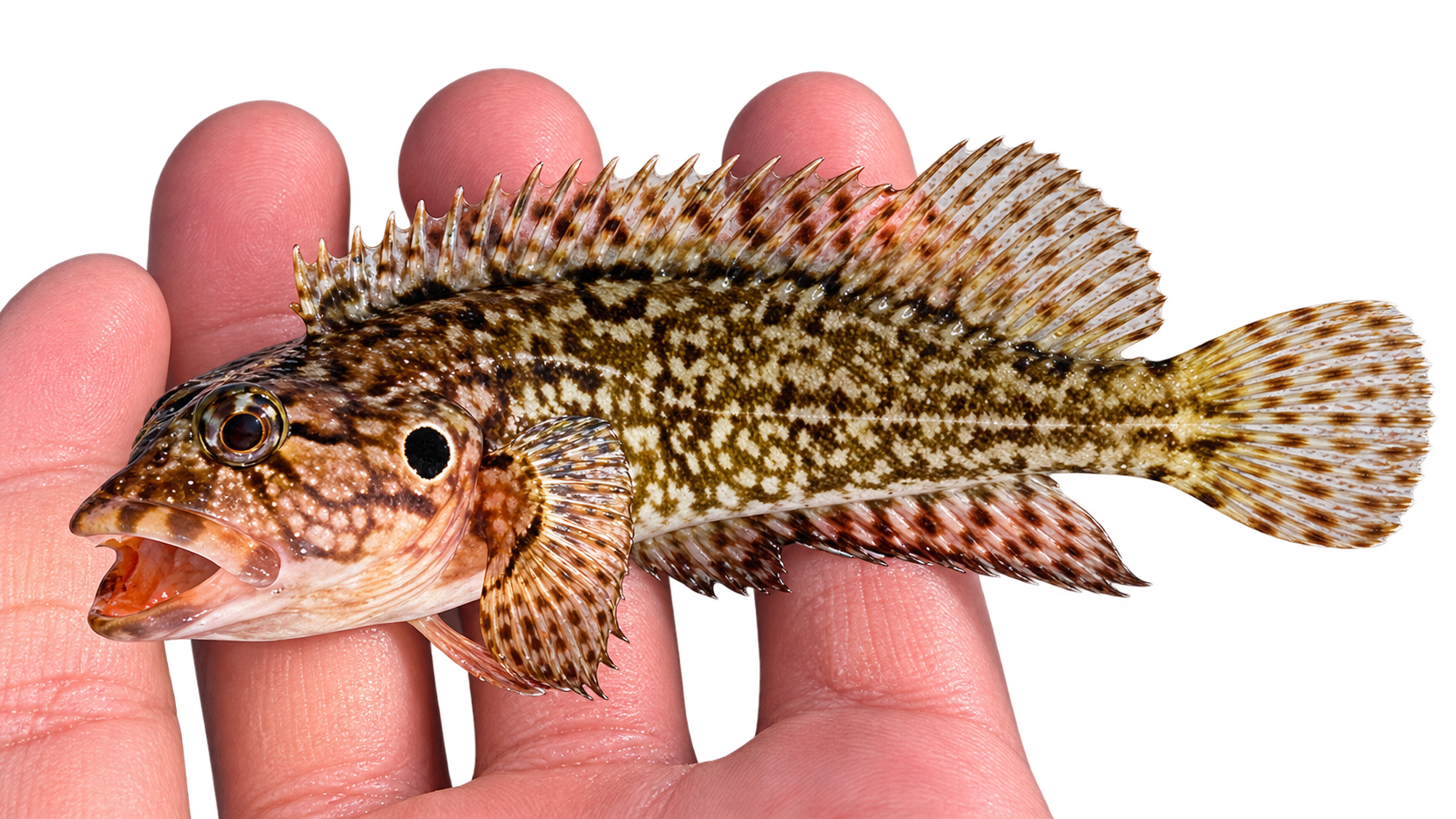
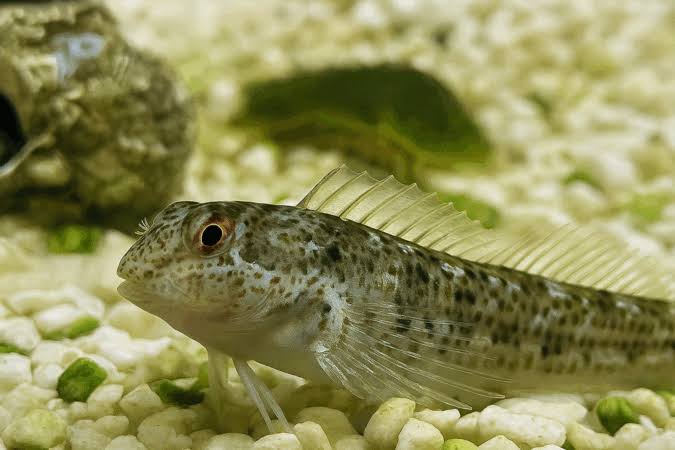
The rockpool blenny lives along rocky shores and tide pools from California south through Baja California. It may reach about six inches, although many are smaller. Look closely, and this little fish is surprisingly beautiful. Its body may be olive, tan, brown, cream, or reddish, covered with markings that help break up its outline against the reef.
- It’s camouflage with personality.
Rockpool blennies eat small bottom-dwelling animals as well as algae. So they are not simply hiding in the reef. They are participating in the life of the reef. For a young marine biologist, this is a wonderful fish to discover. You don’t have to travel to a tropical coral reef to find extraordinary animals.
Sometimes you just need to kneel beside a California tidepool and look carefully.
The Mussel Blenny – Hypsoblennius jenkinsi
If there were a blenny likely to look at a well-designed artificial reef and say, “I could live here,” the mussel blenny would be high on the list. It lives along rocky shores and mussel beds and often occupies holes created by boring clams and abandoned worm tubes.
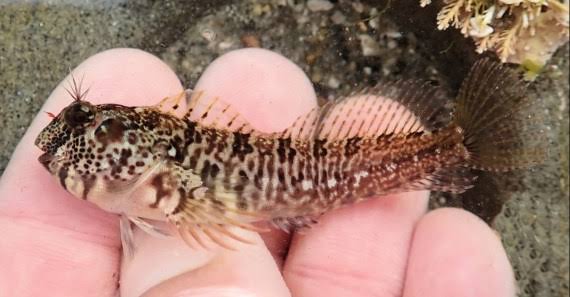
The mussel blenny reaches about five inches and lives in relatively shallow coastal water. Think about what that tells us. For this fish, a reef isn’t simply a large rock. It is the little spaces inside the reef that matter. A hole can become a bedroom. A crack becomes protection. A small tunnel becomes a territory. That is an important lesson for artificial reef design. Sometimes a valuable piece of habitat may be only a few inches across.
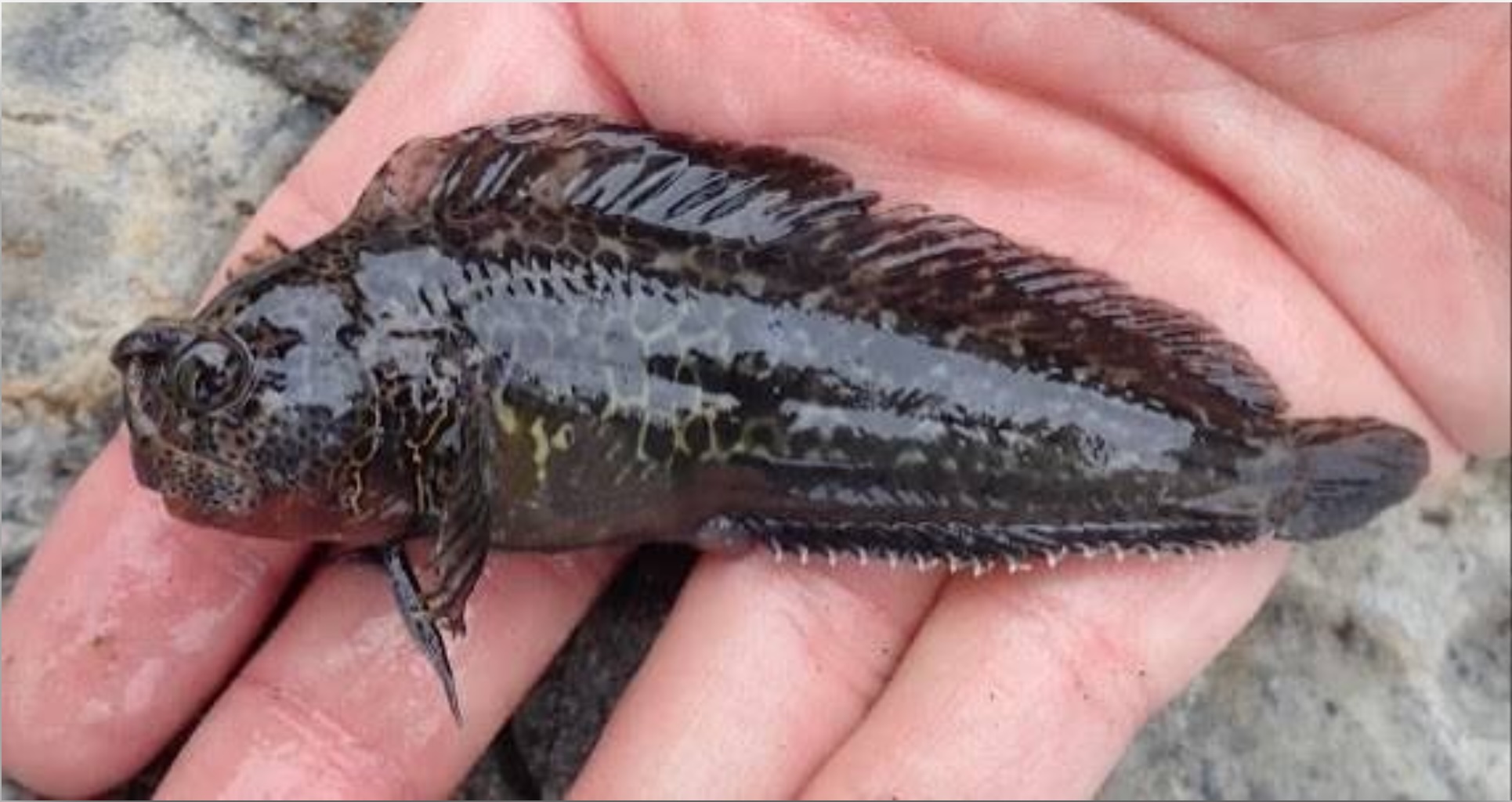
The Bay Blenny – Hypsoblennius gentilis
The bay blenny is another Southern California native that specializes in shallow water. It can be found around rocks, barnacles, and worm tubes and may reach approximately six inches. Its coloring can include shades of brown and green, broken into spots, blotches, and lighter markings that allow it to disappear remarkably well against the bottom.
During breeding season, males can even develop a distinctive reddish bar across the throat. If you think Southern California doesn’t have colorful little reef fish, get a mask and look closer. Beautiful, colorful fish are there in many sizes. They simply aren’t always shouting for attention.
The Onespot Fringehead – Neoclinus uninotatus
Now things become a little stranger. The onespot fringehead has a large head, a surprisingly big mouth, a long body, and a prominent dark eyespot on its dorsal fin. It can approach ten inches in length, although much of the fish may remain hidden inside its shelter. This fish also gives us another excellent lesson about habitat. On Southern California reefs and around structures such as piers, onespot fringeheads have been observed occupying all kinds of cavities. Historically, researchers even found them using bottles, pipes, cans, and other human debris.
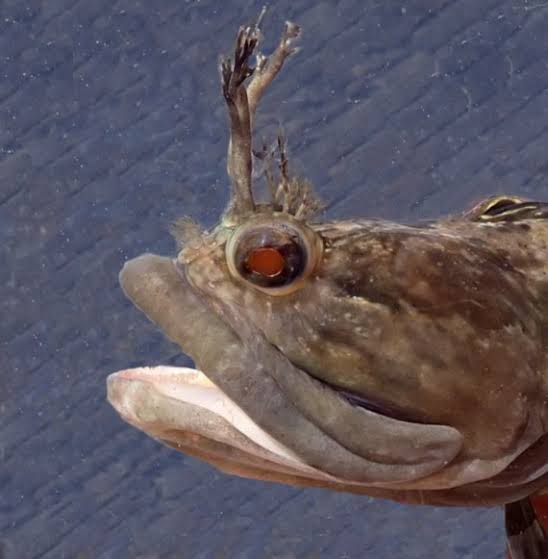
Give this fish the right clean, protected cavity, and somebody may move in! Once a fringehead establishes a home, it can become fiercely protective. This may be a small fish. But as far as it is concerned, that hole belongs to him.
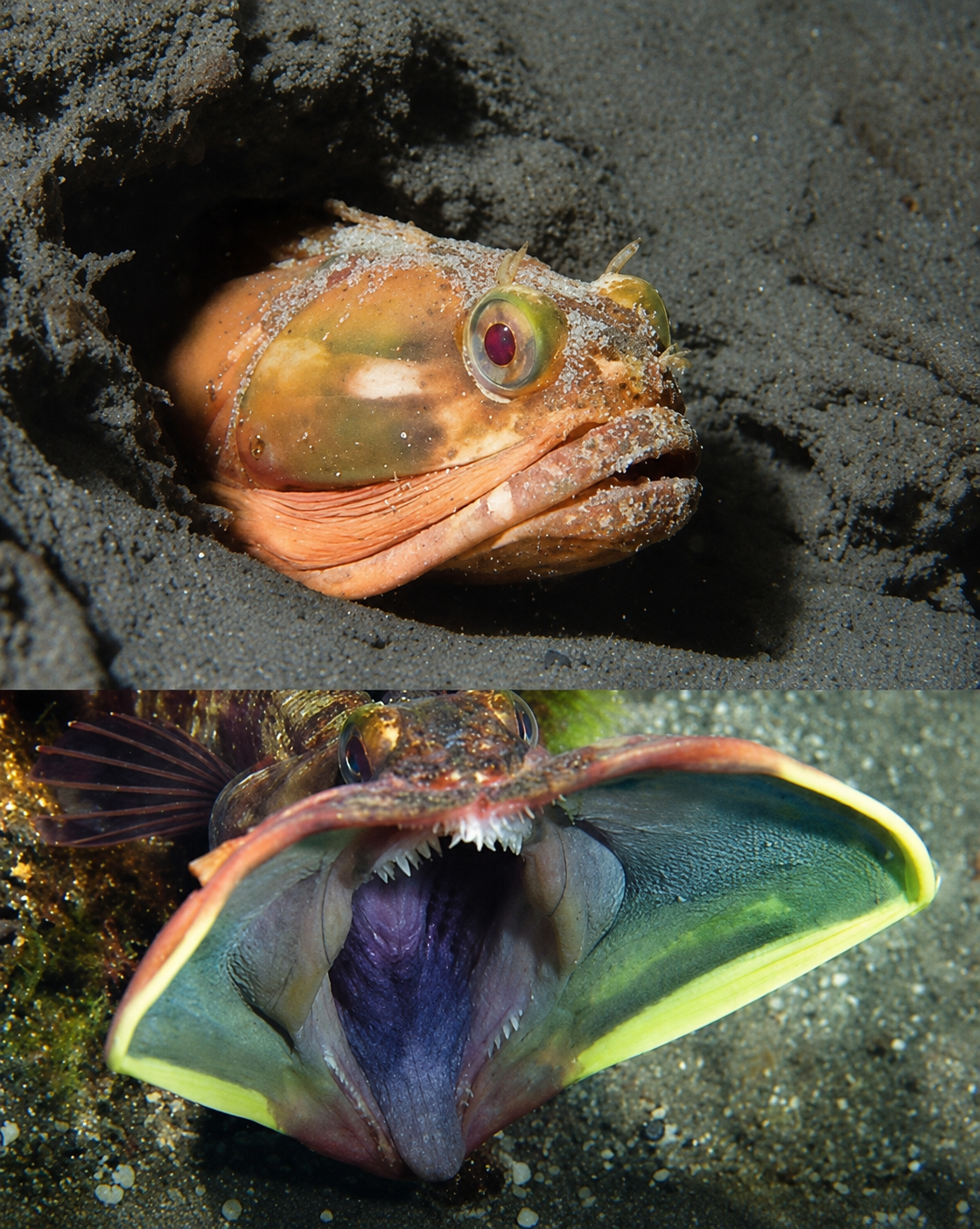
The Sarcastic Fringehead – Neoclinus blanchardi
Yes. That really is its name. And it deserves it !
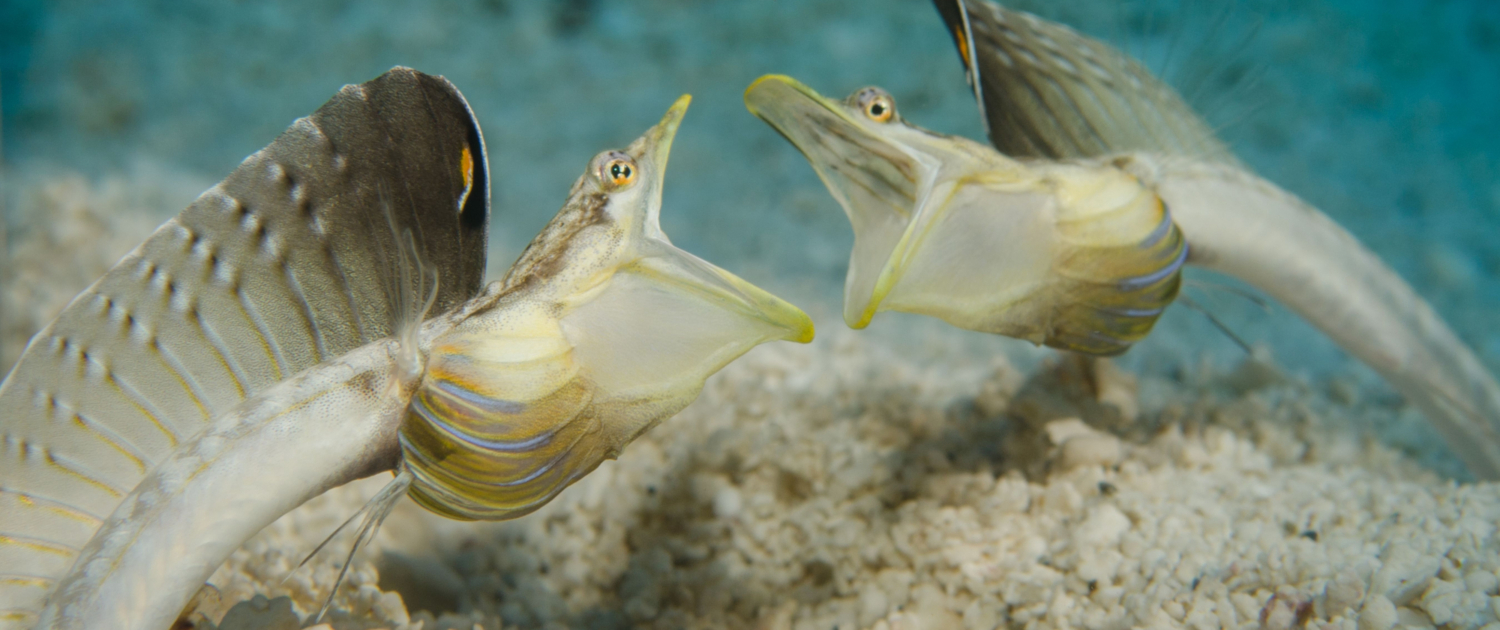
Most of the time, a sarcastic fringehead may sit peacefully inside a shell, burrow, hole, or rock crevice with little more than its head showing. Then another fringehead gets too close. Suddenly, its mouth opens into an enormous, colorful display that seems impossibly large for the fish attached to it.
When two males confront each other, they may use their open mouths to size one another up. If neither retreats, the confrontation can turn into an extraordinary mouth-to-mouth wrestling match.
Imagine two tiny neighbors arguing over property by opening their mouths as wide as possible and pushing them together.
Reef Apartments: Why Tiny Spaces Matter
Welcome to reef real estate! Adult males defend their shelters, and males may also guard eggs deposited inside the nest. They may be small. But courage apparently isn’t measured in inches.
This may be one of the most important things blennies can teach us about artificial reefs. When people imagine a reef, they tend to think about its overall size. A blenny has a different perspective.
The blenny is thinking: Where is my hole? Where can I hide? Where can I lay eggs? Where can I escape a predator? Where can I eat? A successful artificial reef is the answer for these amazing fish. Research on Southern California artificial reefs has shown that reef design can create very different levels of vertical relief, ruggedness, slope, and habitat complexity. The restored Palos Verdes reef provides a good example. Its designers incorporated different heights, openings, gaps, and channels to create habitat similar to productive natural reefs.
That philosophy fits beautifully with blennies. Large spaces can serve large fish. Medium-size ledges may shelter lobsters, octopuses, and young reef fish. And the reef can contain countless small cracks, hollows, and openings for its tiniest residents.
A healthy neighborhood needs homes of many different sizes. Small Fish in a Big System It is easy to look at a three-inch fish and wonder whether it really matters. It does.
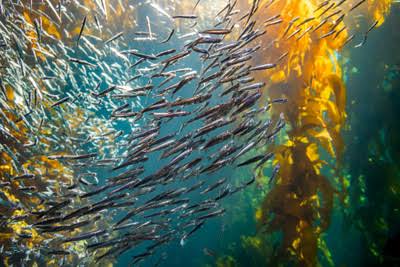
Depending on the species, blennies eat algae, tiny crustaceans, worms, mollusks, and other small organisms. At the same time, these little fish become part of the food web for larger animals. That is how ecosystems grow. Tiny organisms support small animals. Small animals support larger ones.
- Algae grow.
- Invertebrates colonize.
- Fish arrive.
- Predators follow.
Gradually, something that began as rock and structure becomes something very different: A living reef community. Getting to Know the Blennies
Our Southern California coastline is home to a fascinating collection of these small residents, Most are only a few inches long. But think about the reef from their perspective. A crack between two rocks can be a cave. An abandoned worm tube can become a home. A tiny opening can offer a place to hide from predators, guard eggs, or watch the neighborhood without exposing the entire body. And although they are small, many blennies are surprisingly territorial. A fish four or five inches long can become extremely serious about defending the particular hole it has chosen.
For artificial reefs, this reinforces an important principle: Small-scale habitat also matters. A reef needs more than large caves and ledges. It needs narrow cracks. Protected pockets. Little tunnels. Different textures. And surfaces where algae and tiny marine animals can become established. These seemingly insignificant details may determine whether an artificial reef remains simply an underwater structure—or develops into a genuine neighborhood.
And if you ever snorkel or dive around one of these reefs, here is the secret to finding a blenny: Don’t just look across the reef. Slow down. Move closer. And look into it. These small animals are a huge part of the wonderful reef world.
Why We Build Reefs…
Building artificial reefs is one of AnEcoScape’s passions. We believe these reefs do far more than restore coastline habitat and create new places of beauty beneath the ocean. They also create curiosity. A young person who sees a reef come alive may begin asking questions. What lives here? How does this animal survive? Why does this ecosystem matter? That curiosity can grow into a love of marine biology, conservation, and the natural world.
Some of those students may become the scientists, marine biologists, environmental leaders, and ocean stewards of the future. That is why artificial reefs can impact far more than the animals that inhabit them. They help people see the extraordinary web of life beneath the surface and understand that we are part of it, too. When we create habitat, we are not only helping restore today’s ocean. We are helping inspire the people who will care for the ocean tomorrow.
A Future AnEcoScape Reef: Imagine returning to a new AnEcoScape artificial reef several years after it has been placed.
At first, you notice the larger animals. Perhaps kelp bass move overhead. A lobster’s antenna appears beneath a ledge. An octopus has claimed a den. Then you move closer. There is a tiny face inside a hole…the blennies are here! Another disappears beneath some mussels. Something with ridiculous eyebrows watches you from behind a rock.
And a territorial fringehead has apparently decided that one particular opening belongs to him—and has absolutely no intention of discussing the matter.
That is one of the most exciting possibilities in creating habitat.
We aren’t simply building reefs for the animals everybody notices. At AnEcoScape, we are creating opportunities for an entire community. From the giant sea bass…all the way down to a blenny peering out of a hole no bigger than your thumb.
Patrick Dean M.A.
Associate Writer and Board Member of AnEcoScape NPO
Patrick Dean is a Master Career and Business Advisor and Corporate Trainer. His work has taken him around the world, and he strongly advocates for preserving our shores, oceans, and aquatic life. Patrick also served as a fishing boat captain in San Diego for over 13 years.
Patrick Dean’s Website
AnEcoScape is a Non-Profit 501(c)(3) Organization. Our mission is to educate, improve, and restore the health, productivity, and diversity of the near shore marine life and nearby terrestrial areas, which are rapidly degrading from human activities.
If you like this article, please give us a small contribution by making a Donation to AnEcoScape to support our cause.
 Photo By Erick Morales - Oyloa. Anacapa Island, California