Dwellers of the Reef
The Horn Shark: The Gentle, Spotted Guardian of the Reef
By Patrick Dean, October 8, 2026
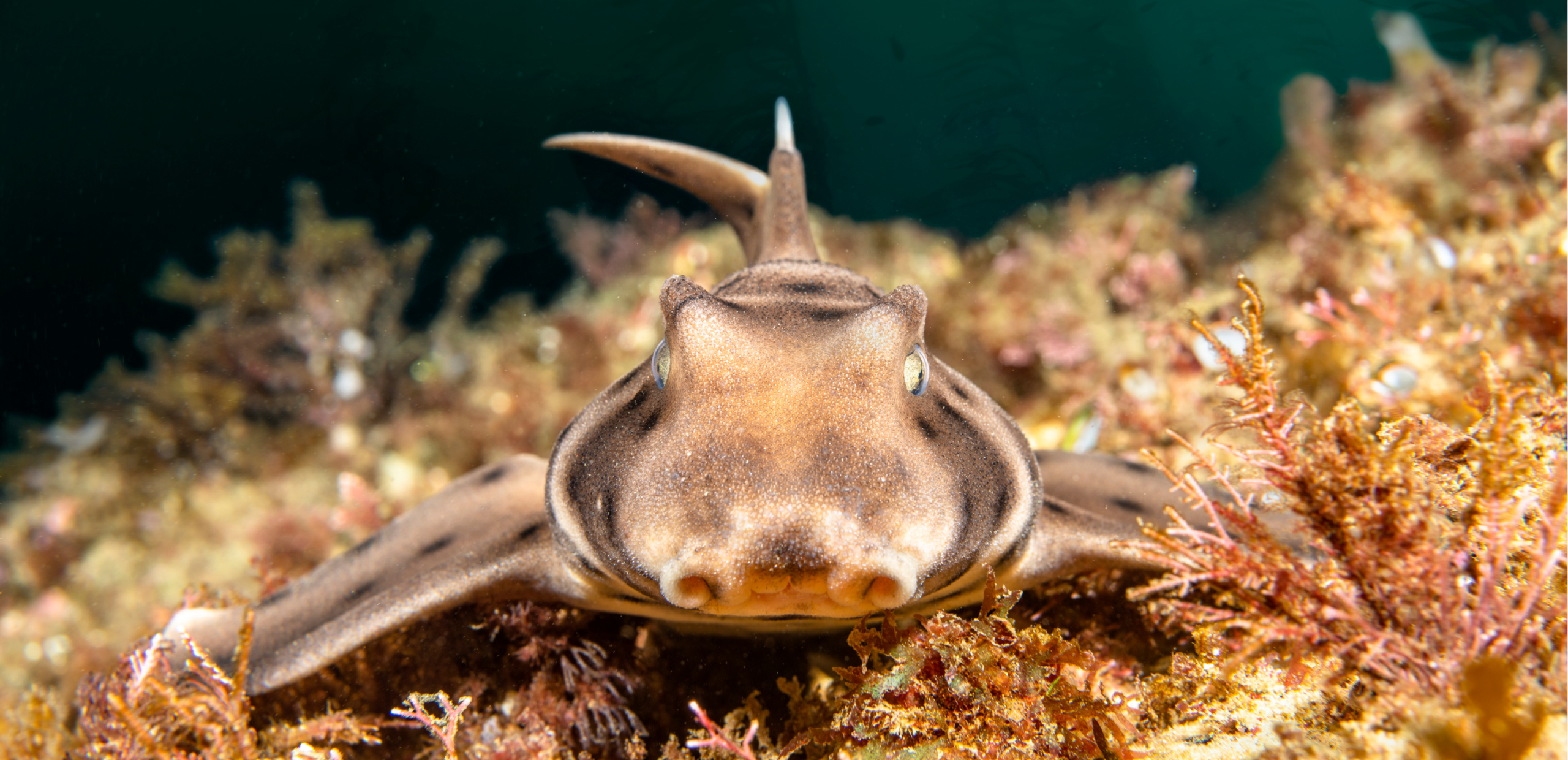
Meet the Horn Shark
Imagine you’re snorkeling along the Southern California coast. Below you, sunlight dances across a rocky reef. Bright orange garibaldi swim between the rocks, kelp sways gently in the current, and small fish dart in and out of hiding places.
Then you notice something unusual.
Tucked beneath a rocky ledge is a beautifully spotted animal. Its broad head rests on the seafloor, its eyes seem to be watching you, and two small dorsal fins rise from its back. You’ve discovered a horn shark, one of Southern California’s most fascinating reef inhabitants.
Unlike the large, fast-swimming sharks we see in movies, the horn shark lives a relatively quiet life. It spends much of the day resting among rocks and ventures out to hunt when darkness falls. Horn sharks are generally shy and nonaggressive. They’re not interested in chasing people and certainly aren’t looking for trouble.
For snorkelers and scuba divers, discovering one is a special experience. Although horn sharks are familiar residents of Southern California’s reefs, their remarkable camouflage makes them surprisingly difficult to spot.
A Shark Unlike Any Other
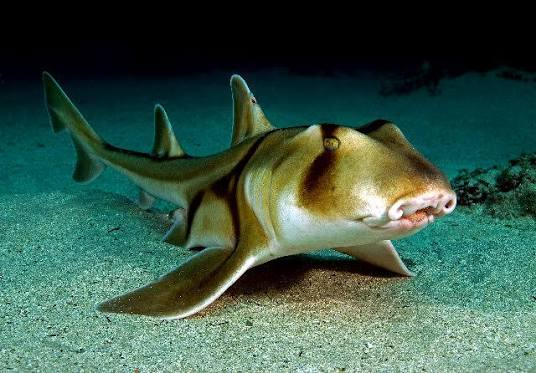
The horn shark looks quite different from what most people imagine a shark should look like. Its body is sturdy and muscular rather than sleek and streamlined. It has a short, blunt snout and distinctive ridges above its eyes that give its face an almost prehistoric appearance.
Its skin is a beautiful mixture of brown, gray, and tan, decorated with dark spots. These patterns help the shark blend into its rocky surroundings. Adults typically reach about three feet in length, although larger individuals can grow to four feet and weigh approximately 20 pounds.
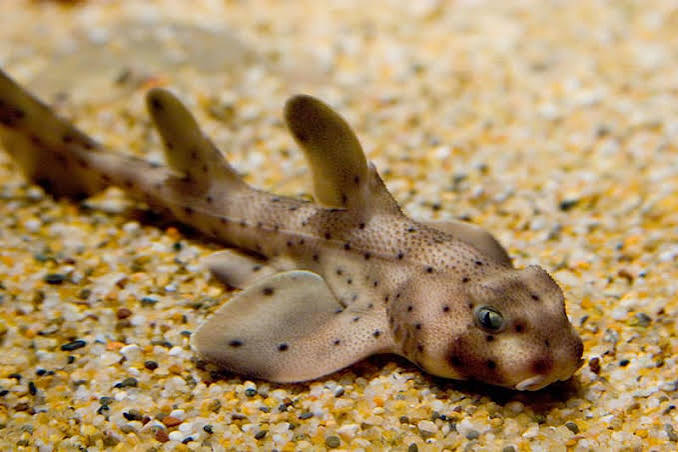
Two prominent dorsal fins rise from its back, each with a sharp spine in front. These spines provide protection against larger predators. Perhaps its most surprising characteristic is the way it moves. Horn sharks use their broad, muscular pectoral fins to push themselves across the ocean floor. Watching one maneuver over rocks, you might think you’re seeing a shark walking! It’s a wonderful adaptation for an animal that spends much of its life exploring the seafloor.
A Home Among the Rocks
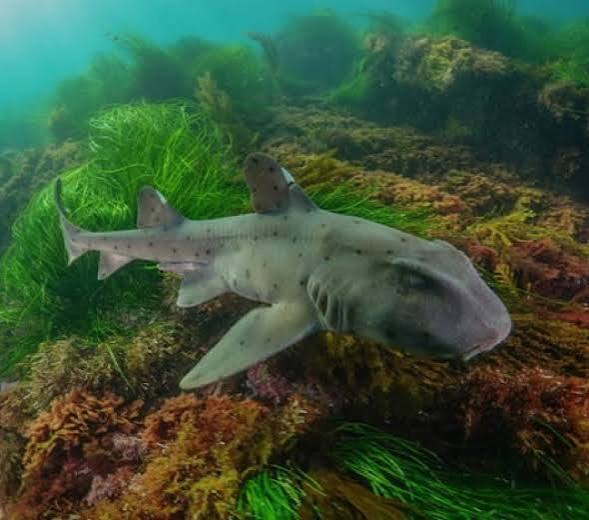
Horn sharks are true residents of Southern California’s rocky reefs and kelp forests. They live along the California coast, around the Channel Islands, and south into Baja California and the Gulf of California. They prefer rocky habitats that provide protection. An underwater cave, a crack between rocks, or a sheltered ledge might become a favorite resting place.
Here’s something fascinating: Horn sharks frequently return to the same resting places day after day. Scientists have found that adults may remain within relatively small home ranges for long periods. A horn shark may spend much of its life in the same underwater neighborhood.
During the day, horn sharks typically rest beneath rocks or inside crevices. As evening approaches, they become active and move through their territory in search of food.
Although they can live at considerable depths, horn sharks are frequently encountered on shallow rocky reefs, often between approximately 6 and 40 feet below the surface. Imagine returning to a favorite dive site and knowing that somewhere beneath those rocks, a familiar shark may be resting. Perhaps you even encountered the same individual on an earlier dive.
That’s one of the wonderful things about reef ecosystems is that they aren’t simply places where animals pass through. For many creatures, they are home.
The Nighttime Hunter
Don’t let the horn shark’s quiet daytime behavior fool you. When darkness falls, it becomes a capable hunter.
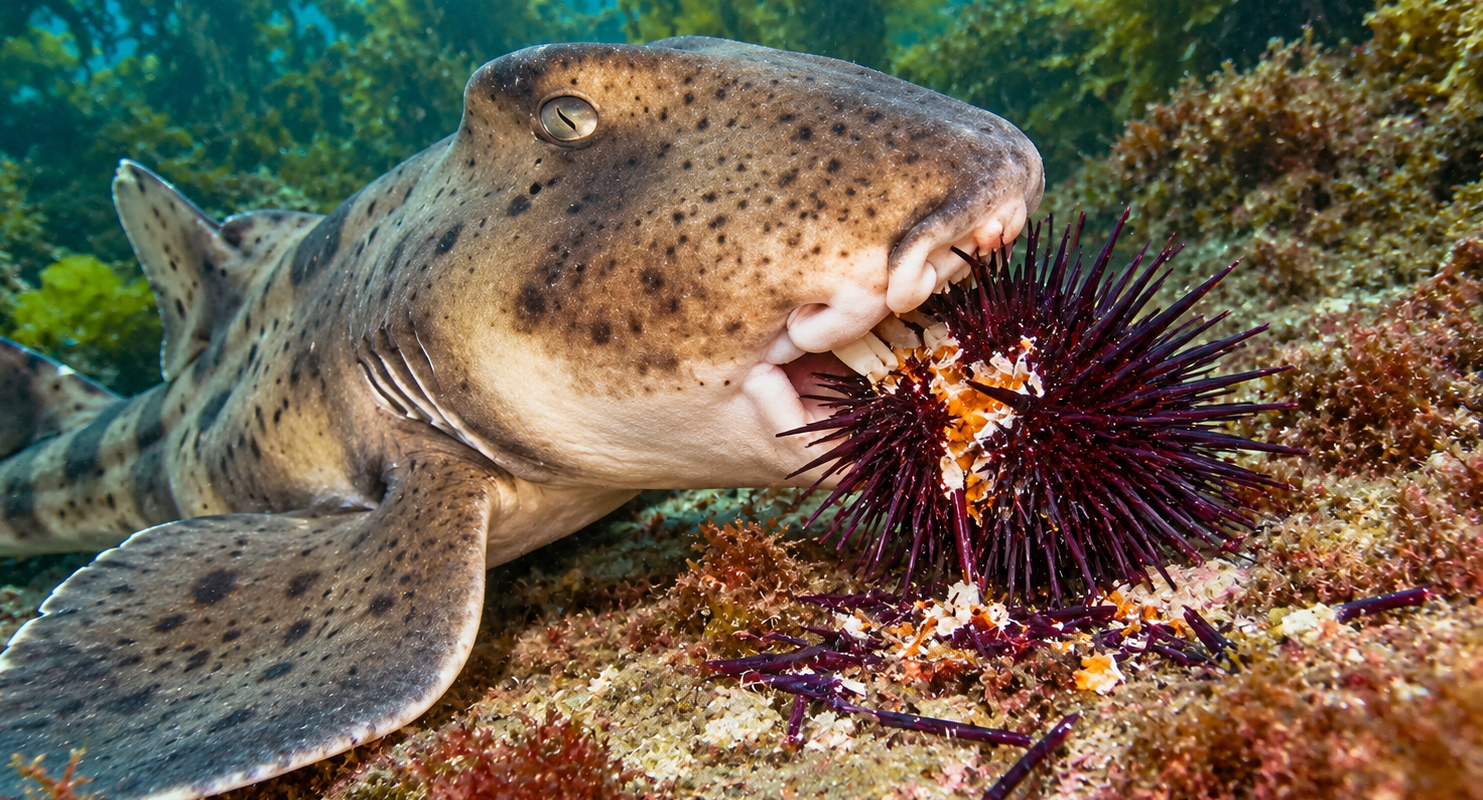
Horn sharks feed on animals living along the ocean floor, including sea urchins, crabs, snails, clams, and occasionally small fish. One of their favorite foods is the sea urchin. If you’ve explored Southern California’s reefs, you’ve probably noticed these round, spiny animals clinging to rocks. But how does a shark eat something covered with sharp spines?
- The answer is in its remarkable teeth.
Most people imagine sharks having rows of sharp teeth designed for tearing flesh. Horn sharks have two different kinds of teeth. Sharp front teeth grasp and hold prey, while broad, flattened rear teeth crush hard shells. Even a sea urchin’s tough outer skeleton is no match for those powerful jaws.
The scientific name fro their teeth is Heterodontus and comes from Greek word meaning different teeth. Horn sharks also use suction to pull prey toward their mouths, allowing them to feed in the tight spaces of rocky reefs. Rather than relying on speed, they use strength and specialized feeding abilities.
Why Horn Sharks Matter to the Reef – Keeping the Reef Balanced
Every animal living on a reef participates in a larger community. Some feed on algae, while others hunt fish, crabs, and other small animals. Together, they form an interconnected food web.
Horn sharks play an important role as bottom-dwelling predators, particularly through their relationship with sea urchins. Sea urchins feed on algae, including kelp. Normally, this grazing is part of a healthy reef ecosystem. But when urchin populations become extremely large, they can consume so much kelp that flourishing underwater forests become nearly barren. These areas, called urchin barrens, provide far less shelter and food for many marine animals.
Horn sharks are among the predators that feed on sea urchins. California sheephead, spiny lobsters, and other marine animals also help regulate urchin populations. Scientists continue studying how strongly these predators influence the balance between sea urchins and kelp forests. Horn sharks are one part of this complicated ecological relationship.
Horn sharks also become prey for larger marine predators, particularly when young. Their camouflage, rocky hiding places, and sharp dorsal spines help protect them. The important lesson is that a healthy reef depends on relationships among its many inhabitants.
A horn shark eating a sea urchin is not simply one animal having dinner. It’s part of a much larger story about how ocean ecosystems work.
The Remarkable Corkscrew Egg
Perhaps the most extraordinary feature of the horn shark is the way it reproduces. Many sharks give birth to live young. Horn sharks lay eggs, and they look like something an imaginative engineer invented!
Instead of being round or oval, the horn shark produces a dark, leathery egg case shaped like a corkscrew. Imagine a large, twisted screw approximately five inches long, with broad spiral ridges winding around its surface.
Its unusual design serves an important purpose A rocky reef may seem peaceful, but underwater currents and waves can be powerful. An ordinary smooth egg might roll across the bottom or wash away.
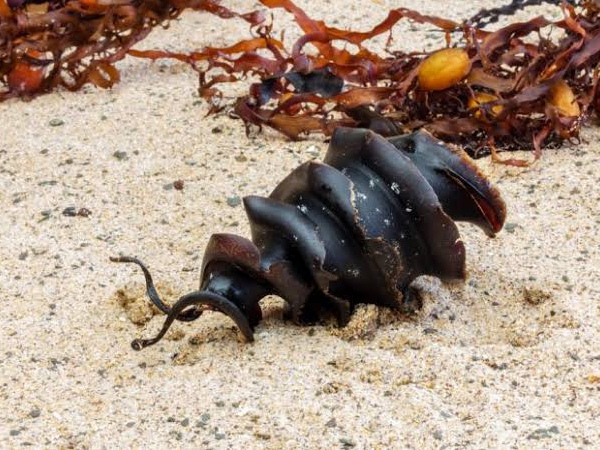
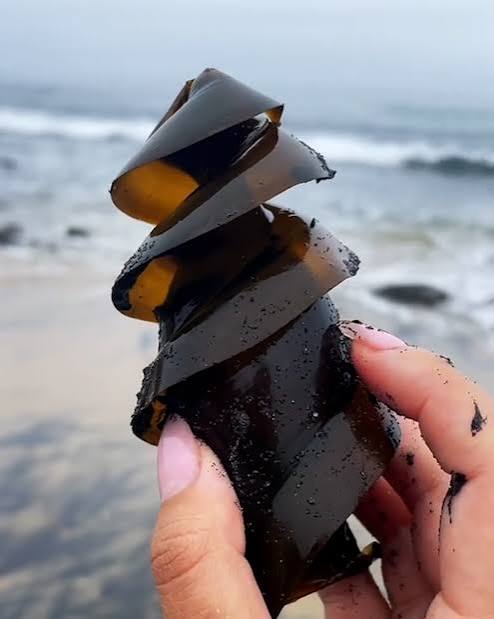
The horn shark’s spiral egg case has a built-in solution. After laying an egg case, the female can pick it up in her mouth and wedge it into a rocky crevice. Its corkscrew shape helps hold it securely in place.
Inside, a single developing baby shark receives nourishment from its yolk. After about six to nine months, a miniature horn shark emerges, already equipped with the instincts it needs to begin life on the reef.
Female horn sharks may produce numerous egg cases during a breeding season, sometimes as many as 24.
For divers, finding one of these remarkable spiral egg cases tucked among the rocks reminds us the reef is also a nursery for future generations.
Egg cases should never be disturbed or removed. They may contain developing young, even when they appear abandoned.
Horn Sharks and Artificial Reefs
One of AnEcoScape’s goals is to help create underwater habitats that support thriving marine communities. Horn sharks show why a reef’s physical design matters. To a horn shark, a reef is much more than a collection of rocks. It’s a place to rest, find food, avoid predators, and potentially protect developing eggs.
Imagine an artificial reef with stable structures, protected passageways, and spaces beneath rocky ledges. These sheltered areas provide hiding places for fish, crabs, lobsters, and other marine animals. Over time, algae and marine organisms begin covering the surfaces. Small fish arrive, crustaceans find shelter, and sea urchins graze on the growing algae.
As the marine community develops, the reef may begin providing suitable habitat for horn sharks. Particularly important are sheltered crevices that resemble the rocky spaces horn sharks naturally prefer. These could potentially provide locations where females deposit their unusual spiral egg cases.
Of course, building an artificial reef doesn’t guarantee horn sharks will move in. Its location, design, and surrounding environment must provide suitable conditions. The goal isn’t simply to attract a shark. It’s to create a healthy ecosystem where a shark can naturally find a place to live. That’s an important principle of marine habitat restoration.
A Special Discovery for Divers and Snorkelers
Ask an experienced Southern California scuba diver about memorable underwater encounters, and you may hear stories about horn sharks. There’s something wonderful about discovering one resting quietly beneath a ledge. Perhaps you notice its spots first. Then you recognize the broad head, small eyes, and distinctive dorsal fins.
- You realize you’ve found a shark!
Yet instead of a frightening encounter, you’re witnessing an animal perfectly adapted to its surroundings. Horn sharks are generally shy and pose little danger to people who leave them alone. However, they may bite when handled or harassed, and their dorsal spines can cause injury.

The best approach is to observe quietly from a respectful distance. Never pull a horn shark from its resting place, touch its body, or move an egg case. Remember that the shark may be using that particular shelter as its daytime home.
Remember that the shark may be using that particular shelter as its daytime home. One of the great pleasures of snorkeling and diving is learning to recognize marine animals in their natural surroundings. We begin to notice their behavior and understand why they prefer certain habitats. We discover that the underwater world isn’t simply a collection of strange creatures. It’s a living community filled with relationships and remarkable adaptations. The horn shark is a perfect example.
A Future AnEcoScape Reef
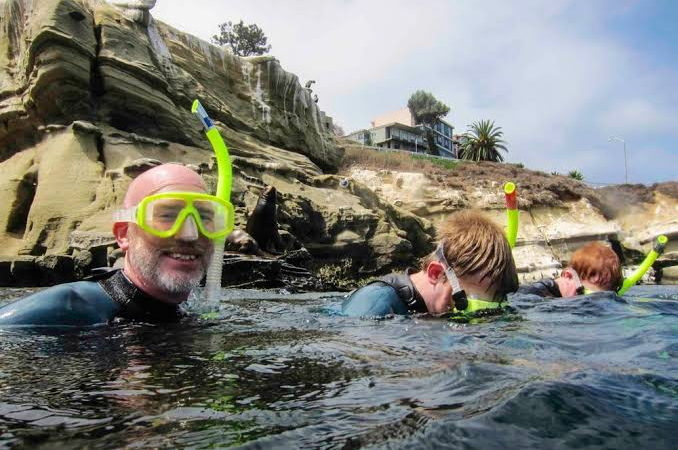
Imagine a young student participating in an AnEcoScape marine education program. Perhaps this student has never seen a shark outside an aquarium. One day, the student joins a supervised snorkeling expedition near a restored coastal reef. Looking down through the clear water, the student sees kelp moving gently in the current. Small fish swim among the rocks, and a lobster retreats beneath a ledge.
Then something catches the student’s attention. A horn shark rests quietly beneath a rocky overhang. Its beautifully spotted body blends into the reef. Its broad head rests motionless. For a moment, the student watches in amazement.
A real shark, living freely in the ocean. No television screen. No aquarium glass. Just a living animal in its natural environment. Perhaps that experience awakens a lifelong interest in marine biology. Maybe it inspires the student to become a scuba diver, study marine ecosystems, or pursue a career in ocean conservation.
Sometimes a single encounter with nature can change a young person’s life.
That’s one of the most exciting possibilities of the AnEcoScape mission. Artificial reefs can be more than underwater habitats. When thoughtfully designed and connected with educational opportunities, they can become places of discovery. They can introduce young people to the remarkable diversity of life that exists just beyond our shoreline and inspire future generations to protect our oceans.
One Last Look at the Horn Shark
The horn shark may never receive the attention given to great white sharks, hammerheads, or other famous ocean predators. It doesn’t leap dramatically from the water or travel thousands of miles across the ocean.
Instead, it spends its life quietly exploring California’s rocky reefs where it searches for food, returns to familiar resting places, and lays extraordinary corkscrew-shaped eggs that protect the next generation. Through its daily activities, it helps build the relationships that make a healthy reef possible. Through its daily activities, it helps build the relationships that make a healthy reef possible.
For those fortunate enough to encounter one while snorkeling or diving, the experience reminds us that some of the ocean’s greatest wonders aren’t the largest or most dramatic. Sometimes they rest quietly beneath a rock, waiting to be discovered.
The horn shark reminds us that every reef is a neighborhood, every animal has a role, and every encounter with nature offers an opportunity to discover something extraordinary.
Patrick Dean M.A.
Associate Writer and Board Member of AnEcoScape NPO
Patrick Dean is a Master Career and Business Advisor and Corporate Trainer. His work has taken him around the world, and he strongly advocates for preserving our shores, oceans, and aquatic life. Patrick also served as a fishing boat captain in San Diego for over 13 years.
Patrick Dean’s Website
AnEcoScape — Restoring Ocean Habitats. Inspiring Future Generations!
AnEcoScape is a Non-Profit 501(c)(3) Organization. Our mission is to educate, improve, and restore the health, productivity, and diversity of the near shore marine life and nearby terrestrial areas, which are rapidly degrading from human activities.
If you like this article, please give us a small contribution by making a Donation to AnEcoScape to support our cause.