By Patrick Dean – November 6, 2026
Dwellers of the Reef – The California Brown Pelican
The Graceful Fisherman Above the Reef
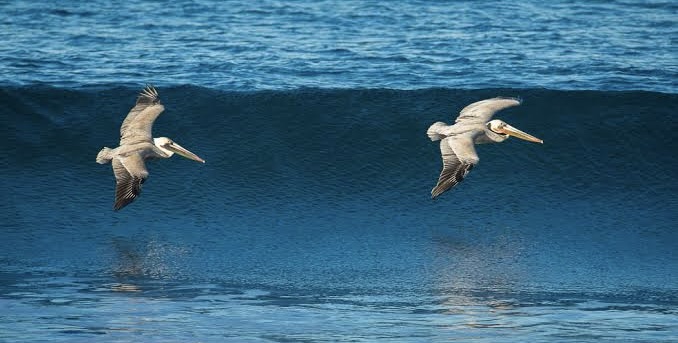
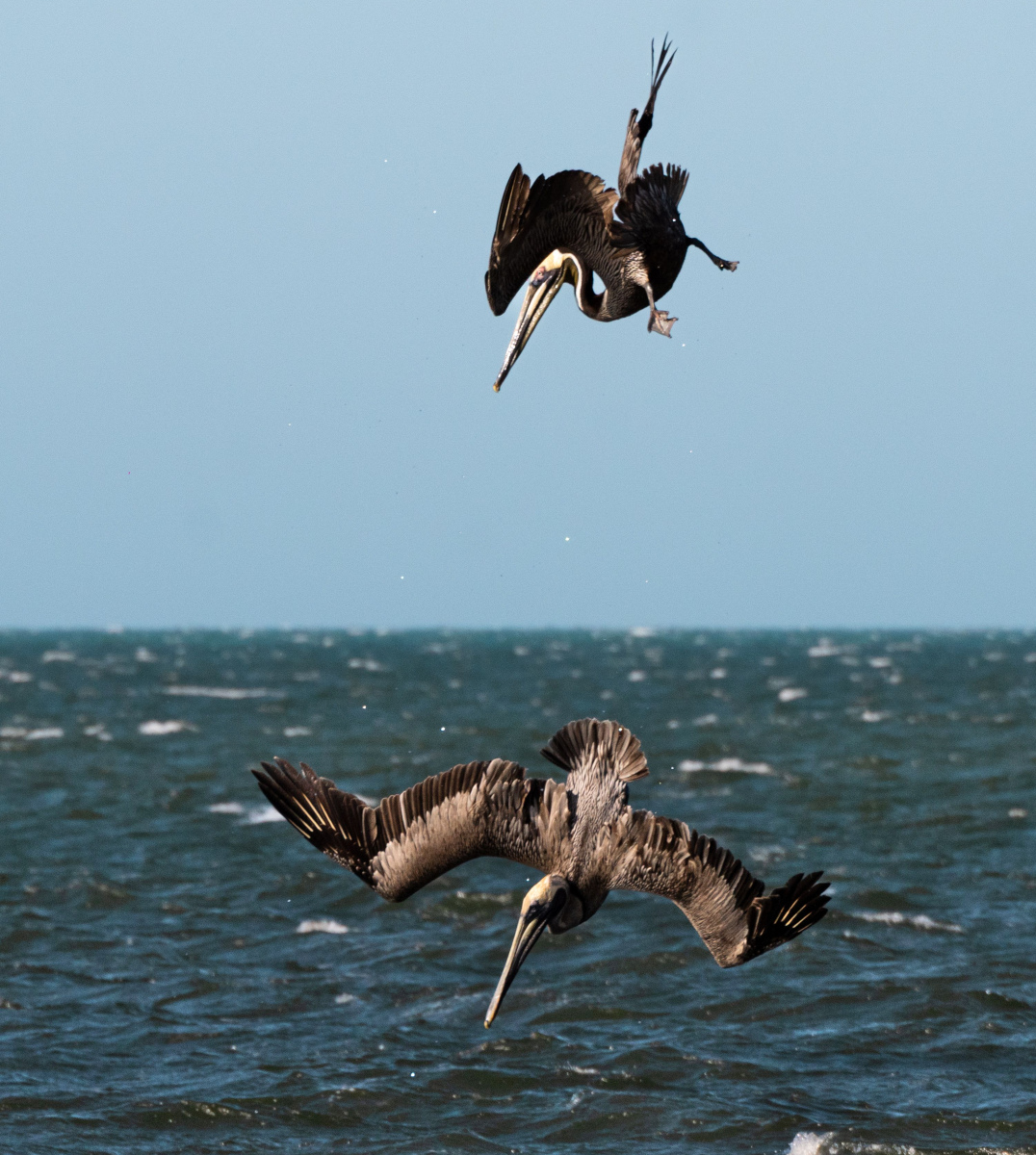
Imagine standing beside the ocean on a quiet morning. Beyond the breaking waves you see a line of large birds glides just above the water. Their broad wings barely move as they follow the rolling swells. Then one of the birds rises, turns, and looks down. Suddenly, it folds its wings tight to its body and plunges headfirst into the ocean. A splash rises where it disappears. Moments later, the bird returns to the surface, its enormous bill holding the possibility of breakfast.
You’ve just watched a brown pelican fishing.
For anyone who spends time along the California coast, these birds become familiar companions. There is something peaceful about watching them soar together, seemingly without effort. Most of our reef neighbors live beneath the waves. The California brown pelican reminds us that the reef’s community also reaches into the sky.
A Bird Unlike Any Other
The California brown pelican, Pelecanus occidentalis californicus, is a Pacific Coast subspecies of the brown pelican. Its long bill and expandable throat pouch make it unmistakable recognizable.
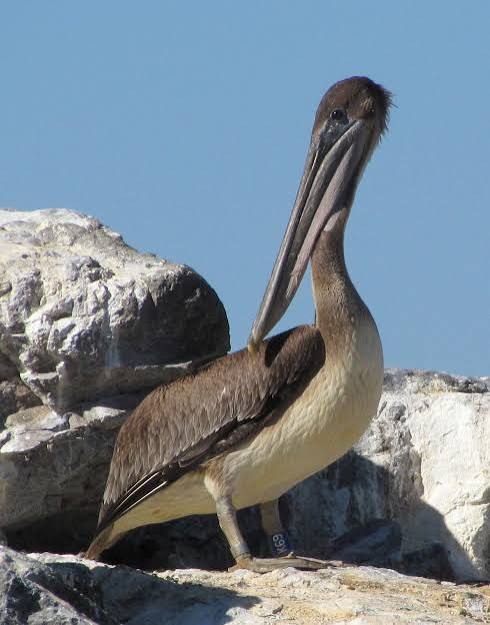
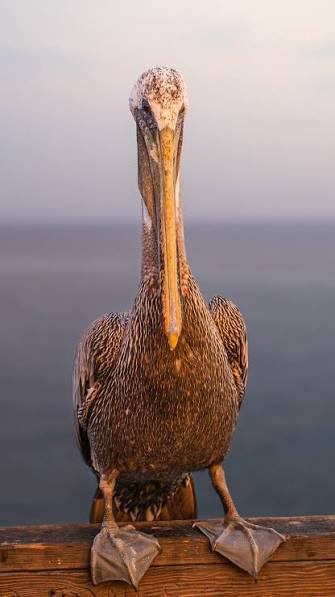
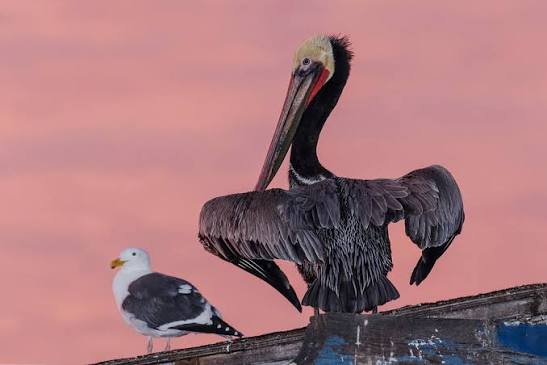
Adults have grayish-brown bodies and pale heads with a yellowish wash on the crown. Their head, neck, and pouch colors change with the breeding season. Younger birds generally have brown heads and lighter bellies.
On shore, a pelican may look a little awkward, but in the air, that same bird becomes a picture of balance and grace. With wings stretching roughly six to seven feet across, a pelican makes an impressive sight overhead. Its webbed feet help it swim, while its broad wings carry it between feeding and resting places.
Riding the Waves Without Touching Them
How can such a large bird glide so close to the ocean without constantly flapping?
Part of the answer lies in moving air.
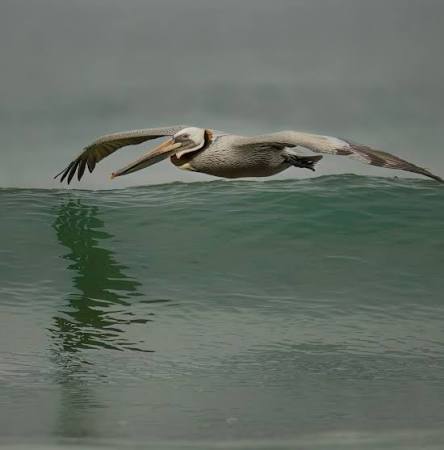
As ocean swells travel, they can push air upward along their faces. Pelicans use that rising air to help support their wings. By adjusting their height and position, they follow the wave’s shape while conserving energy.
Watch a line of pelicans carefully. You may see each bird rise and dip along nearly the same invisible pathway.
The wave is moving through the water, and the birds are riding the air above it.
Scientists call this wave-slope soaring. For the rest of us, it is simply wonderful to watch.
The Remarkable Fishing Pouch
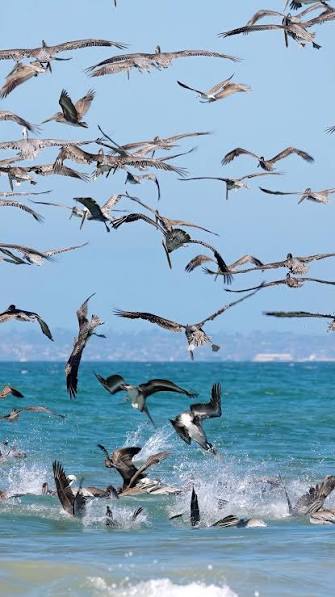
Brown pelicans search from the air for small fish schooling near the surface.
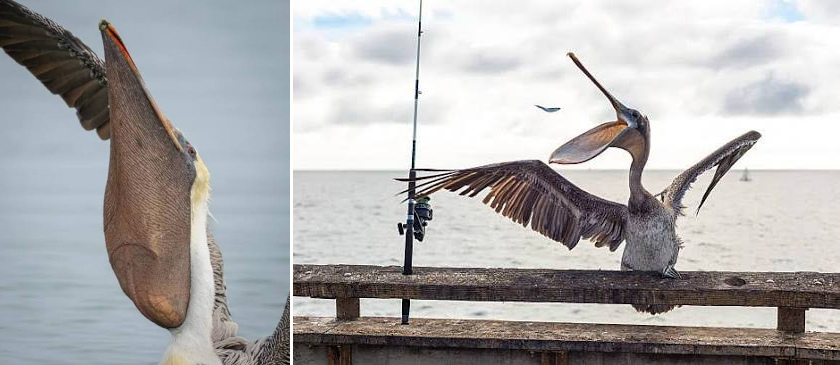
When a bird spots a promising target, it tips downward, draws its wings back, and dives. Underwater, its bill opens, and the flexible pouch beneath its lower bill expands to scoop up fish and water. Once back at the surface, the pelican drains the water before swallowing its catch.
The pouch is a fishing tool rather than a storage bag for meals. Imagine a flexible net that opens at just the right moment, then closes around a slippery catch. However, even after a successful dive, breakfast is not always secure. Other sea birds, such as Gulls sometimes try to steal fish while the pelican is still draining its pouch!
The Reef’s Dining Room Extends into the Sky
Anchovies, sardines, and other small schooling fish connect the underwater world with the birds above it. An important part of this food supply begins with upwelling. Winds move surface water away from the coast, allowing colder, nutrient-rich water to rise from below. Those nutrients support microscopic drifting life called plankton, which helps feed small fish.
Upwelling supports the food web. Predators feeding beneath a school can also push baitfish toward the surface, bringing them within reach of diving birds. Suddenly, a quiet stretch of ocean may become a busy dining room. Fish flash beneath the water. Birds turn overhead. Pelicans plunge, surface, and prepare for another dive.
A reef belongs to this larger coastal neighborhood, where events beneath the surface can help shape what happens in the sky.
A Life Shared with Others
Pelicans often give us an impression of gentleness, especially when resting together on a beach or offshore rock. They are social birds that gather to rest, feed, and breed. You may see them grooming their feathers, floating near one another, or traveling in long lines above the water.
Their calm appearance makes them appealing to watch, but they are wild animals that need space to live. Quiet observation lets us enjoy their company without interrupting it.
Island Nurseries: Breeding and Nesting
California brown pelicans raise their young in colonies, where many pairs nest near one another. Offshore islands provide important breeding habitat, including the Channel Islands and islands in Mexico. Depending on the site, nests may sit on the ground or among low vegetation. A typical clutch contains three eggs, and both parents share the work of incubation.
Here is a surprising detail: brown pelicans warm their eggs with their feet, covering them with the skin of their webbed toes. The eggs hatch after about a month. A nesting colony may look busy and crowded, but each nest holds a delicate beginning. The adults need dependable food nearby and enough peace to care for their families.
Growing Up Pelican
A newly hatched pelican looks very different from the graceful bird flying above the waves.
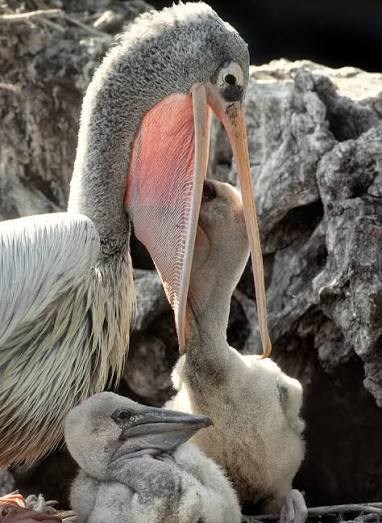
The chicks begin life tiny and nearly featherless and very dependent on their parents. Both adults bring food to their chick. At first, the chicks receive regurgitated but as they grow, they can handle larger meals little by little.
At roughly three months old, young pelicans already begin flying. But getting into the air is only one part of becoming independent. Finding fish and catching them successfully requires developing further demanding skills.
Picture a young bird searching the water below. It must be able to judge where the fish are from their height above the water, choose its right moment, then make its dive. Each attempt is part of learning how to survive.
This early period in a California brown pelican’s life can be difficult. A young pelican needs accessible food and the chance to develop its fishing ability.
Watching a young pelican makes a familiar coastal scene feel different. We are seeing an animal beginning its own life at sea.
Do California Brown Pelicans Migrate?
Yes—many make seasonal journeys, although some remain within their breeding region throughout the year. After breeding, birds often disperse northward along the Pacific Coast, sometimes reaching British Columbia. Many move south again as winter approaches. Food availability also influences where they travel.
Their movements are therefore more flexible than a single migration schedule followed by every bird. The pelican passing your beach today may have traveled a long stretch of coastline. Its journey connects distant islands, bays, and feeding grounds.
What Pelicans Tell Us About the Ocean
Because pelicans depend on accessible fish, their condition and breeding success can reveal changes in the marine food supply. Changes in temperature and upwelling can affect the food web that supports them. Their history also shows why paying attention matters.
During the twentieth century, DDT contamination caused dangerously thin eggshells. Many eggs broke before chicks could hatch. Restrictions on the pesticide and conservation efforts helped brown pelicans recover, and the federal government removed them from the endangered species list in 2009. Their recovery reminds us that people can recognize damage, change their actions, and help wildlife return.
How Our Artificial Reef Project Can Help Pelicans
One of AnEcoScape’s goals is to create underwater habitat that supports thriving marine communities. The potential benefits reach beyond animals living on the seafloor.
A thoughtfully designed artificial reef adds hard surfaces, shelter, and spaces where marine life can grow. It may attract fish and support a developing food web. Its value depends on its design, location, and surrounding conditions. For pelicans, the important question is whether suitable small fish gather within diving reach. AnEcoScape and its partners proposed reef project could help provide:
- Feeding opportunities: Places where pelicans may find accessible baitfish.
- Shared hunting areas: Productive waters where several pelicans gather to feed.
- Practice for young birds: Opportunities for inexperienced pelicans to develop their fishing skills.
These are potential benefits to observe as the reef community develops. A submerged reef supports pelicans through the food web; their nesting and dry resting places remain on islands and along the coast.
Other living organisms on the reef may also contribute to water quality. Mussels and other filter feeders remove tiny particles as they feed. Where conditions are suitable, their activity can improve local water clarity.
Supporting those communities benefits marine creatures, seabirds, and people alike.
Watching Pelicans with Care
A pair of binoculars can turn an ordinary beach visit into an afternoon of discovery. Watch how pelicans search for fish. Notice the difference between a young bird’s brown head and an adult’s pale one. Follow a line of birds as they adjust to the swells. Give resting birds space, avoid approaching nesting colonies, and keep fishing line and hooks out of the water. Discarded fishing gear can entangle birds and cause serious injuries. The best encounters allow animals to continue what they were doing before we arrived.
Seven Amazing Brown Pelican Facts
- They ride rising air. Pelicans use lift above ocean waves to help them glide.
- Their pouch is a fishing tool. It scoops up fish and water, then drains before the meal is swallowed.
- They enjoy company. Pelicans gather to rest, feed, and nest.
- Both parents help raising their chicks, and share the work.
- Their feet warm their eggs. Webbed toes help keep developing chicks warm.
- Many travel seasonally. Some journey north after breeding and south toward winter.
- Their recovery offers hope. Conservation helped bring them back from endangered status.
A Future AnEcoScape Reef
Imagine a student joining an AnEcoScape and its partner’s coastal education program.
From shore, the group watches a young pelican circling above a reef. Below the bird, sunlight catches a school of small fish. The pelican turns and dives. A moment later, it surfaces. The students lean forward, wondering whether it caught anything.
That simple moment can open a much larger conversation. What brought the fish here? What do they eat? How does a reef support life? Why does a bird need a healthy underwater world?
Perhaps one student begins asking questions that lead to a lifelong interest in marine biology. Another discovers the pleasure of watching wildlife closely. A reef can become a place of learning long before someone puts on a mask and enters the water.
One Last Look
The next time pelicans pass along the coast, take a moment to watch.
Notice their quiet coordination and the small adjustments of their wings. Below them, fish move through a world mostly hidden from our eyes.
The pelican connects these two worlds.
Its flight reminds us that protecting a reef means caring about more than what lives among the rocks. It means caring about the relationships that reach through the water, along the shore, and into the sky.
Patrick Dean M.A.
Associate Writer and Board Member of AnEcoScape NPO
Patrick Dean is a Master Career and Business Advisor and Corporate Trainer. His work has taken him around the world, and he strongly advocates for preserving our shores, oceans, and aquatic life. Patrick also served as a fishing boat captain in San Diego for over 13 years.
Patrick Dean’s Website
AnEcoScape is a Non-Profit 501(c)(3) Organization. Our mission is to educate, improve, and restore the health, productivity, and diversity of the near shore marine life and nearby terrestrial areas, which are rapidly degrading from human activities.
If you like this article, please give us a small contribution by making a Donation to AnEcoScape to support our cause.